Think about how fast the digital world is evolving today. Social media trends change every week. Brands need fresh visuals almost every day. Businesses want designs that stand out, connect with people, and still get delivered quickly. This growing pressure has changed the way graphic design works.
This is where Artificial Intelligence (AI) steps in. AI is no longer limited to robots or complex technology. It is now part of everyday creative work. From generating design ideas to improving images, AI is quietly reshaping the graphic design industry. Many designers and every modern graphic design agency are using AI to save time, improve quality, and stay competitive.
Some people fear that AI will take over creative jobs. But the real story is different. AI is not replacing creativity—it is supporting it. In this blog, you will explore how AI is changing graphic design, how designers are adapting, and why the future of design still belongs to humans.
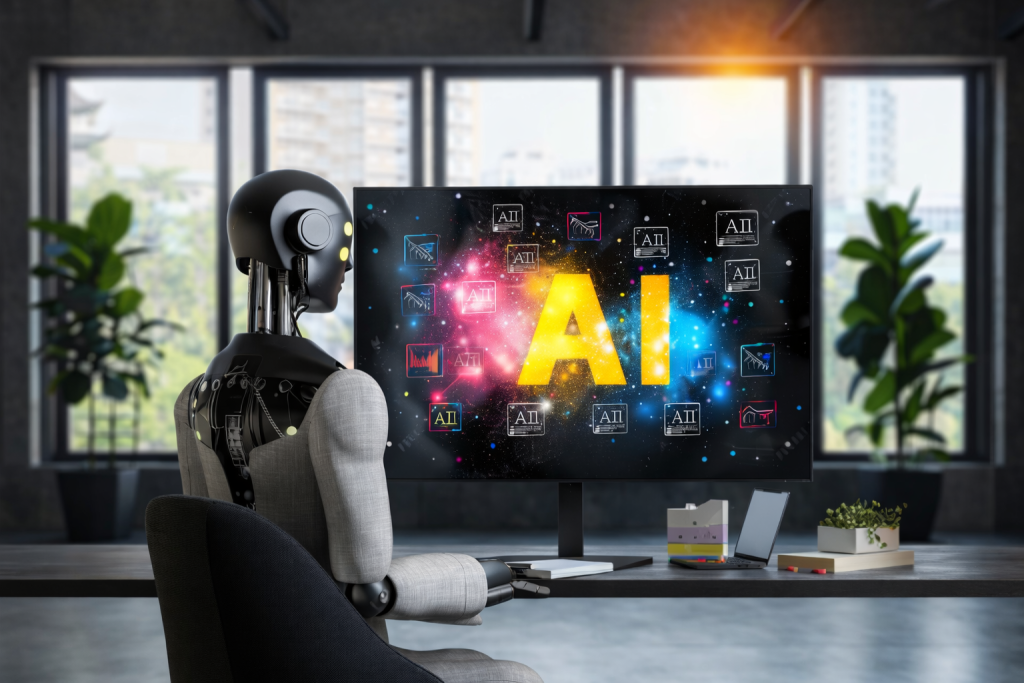
AI in graphic design refers to smart software that can learn from data and assist in creating visuals. These tools analyze thousands of designs, colors, layouts, and user preferences. Based on this learning, AI can suggest or improve design elements.
Instead of starting from a blank page, designers can now start with AI-generated ideas and refine them with their creativity. This makes the design process smoother and faster.
AI is commonly used for:
i) Creating layout suggestions
ii) Selecting fonts and color palettes
iii) Enhancing image quality
iv) Removing or replacing backgrounds
v)Generating visuals from text prompts
For businesses that need quick and consistent branding, AI has become a valuable support system.
Designers often spend hours on small but necessary tasks like resizing images, adjusting alignment, or exporting files in different formats. AI automates many of these tasks. This gives designers more time to focus on creative thinking and problem-solving.
Every designer faces moments when ideas don’t flow. AI tools can suggest layouts, styles, or visual directions based on current trends. These suggestions don’t replace creativity, but they help designers move forward faster.
Maintaining a consistent brand look can be challenging, especially when creating content for multiple platforms. AI helps maintain consistency in fonts, colors, and layouts, which is particularly useful for brands and agencies offering custom graphic design services to businesses.
AI tools allow small businesses and startups to create basic designs without hiring large teams. At the same time, professional designers can use AI to handle routine work while focusing on advanced creative projects.
| Aspect | Traditional Graphic Design | AI-Assisted Graphic Design |
| Speed | Slower process | Faster delivery |
| Idea Support | Manual brainstorming | AI-assisted ideas |
| Repetitive Work | Done by a designer | Automated |
| Cost for Small Tasks | Higher | More affordable |
| Creative Control | Fully human | Human-led with AI help |
| Personalization | Limited | Data-based personalization |
This comparison shows that AI improves efficiency, but creativity still stays in human hands.
This is one of the most common questions people ask online. The answer is simple: AI cannot replace human designers.
AI lacks:
Design is not just about visuals; it’s about meaning, emotion, and communication. AI can assist, but it cannot think or feel like humans. Designers who learn to work with AI will be more valuable, not less.
To grow in this changing industry, designers should focus on:
Designers who adapt will lead the future of the industry.
The future of graphic design will not be about choosing between humans and AI. It will be about collaboration. AI will handle speed and efficiency. Designers will handle creativity, emotion, and vision.
Design projects will become more personalized. Turnaround times will become shorter. Clients will expect smarter solutions, not just good-looking designs. Agencies that offer custom graphic design services for businesses using this balance will stand out.
Instead of asking whether AI is good or bad for graphic design, a better question is this: How can AI help designers do their best work?
AI is changing expectations. Clients want faster results, but they also want meaningful designs. This challenge pushes designers to think beyond tools and focus on ideas, storytelling, and purpose. AI removes the heavy workload so designers can focus on what truly matters, creating designs that connect with people.
The future of graphic design belongs to those who are open to learning, experimenting, and evolving. AI is not the end of creativity. It is a chance to redefine it.
Yes, when used correctly. AI helps speed up processes, but professional designers ensure quality, originality, and brand alignment.
AI allows agencies to deliver faster, manage more projects, and maintain consistency across designs.
AI helps analyze audience behavior and trends, which supports better design decisions for branding and marketing.
Most AI tools are easy to use and helpful for beginners, especially for basic design tasks.
Businesses should look for a balance: AI efficiency combined with human creativity and strategy.
5393 198 St, Langley, BC V3A 1G1, Canada
Phone: 1-604-749-9400
Email: bizfist@gmail.com
© 2026 BizFist | All Rights Reserved.
Chat With Us
